Rocks and Witches
On Pleasure Reading, Time, and Power

My February has been full of snow days and sick days. Here in Chicago we didn’t get the massive snowstorm that hit the Northeast, but I am starting to have that limping along feeling of late winter. There have been a few glorious warm days when the Midwestern men put on their shorts and the kids on the block found their scooters. Enough to remember that spring might come, even though it isn’t quite here yet.
In the meantime, here are two book recommendations to get you through the slog of March.
Crying Over Rocks
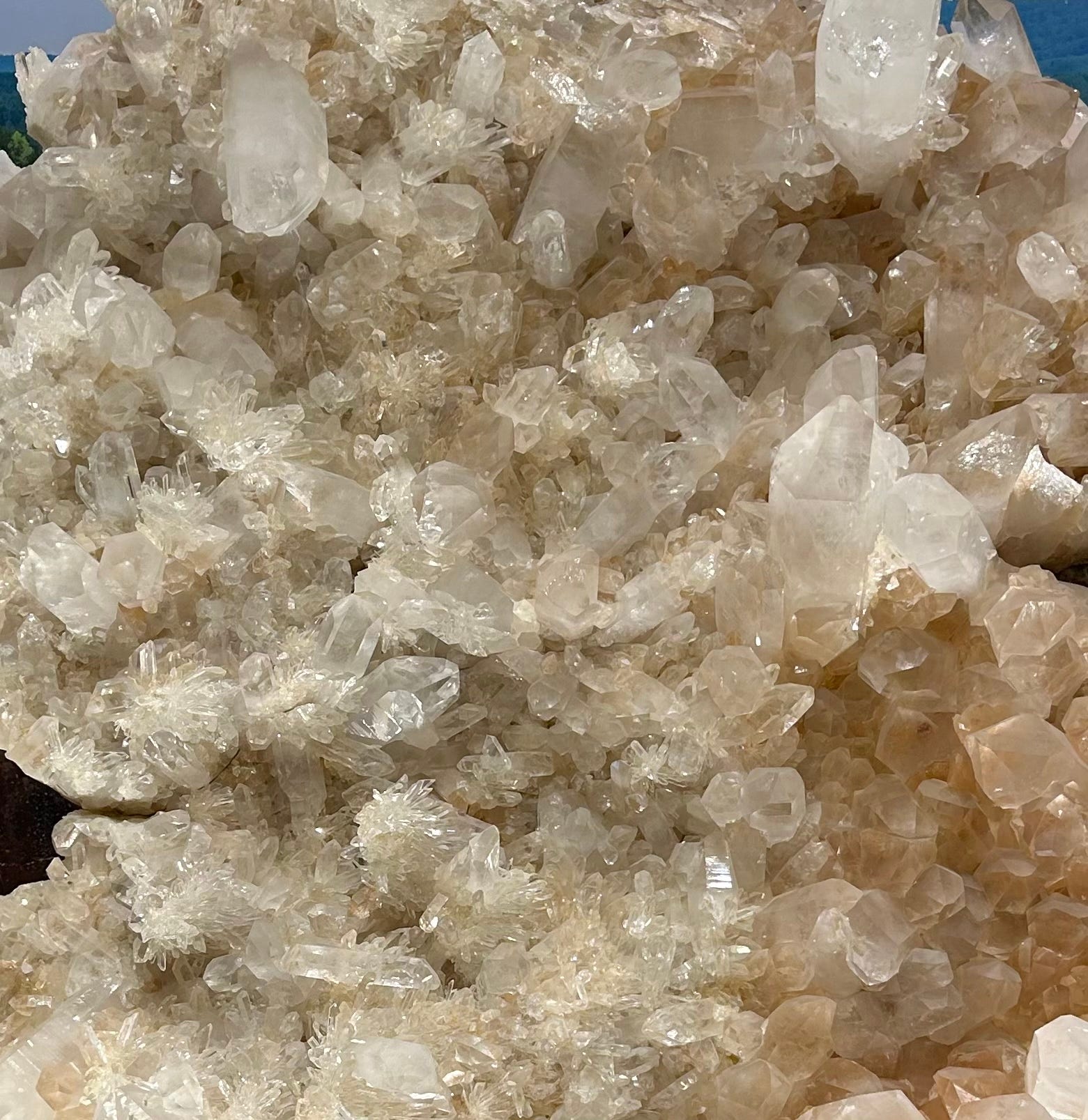
I’m not a huge geology person. I dabbled for a few weeks in second grade in the world of the sedimentary and the metamorphic. I’ll happily look at the shiny amethysts and jagged crystals in the Hall of Gems at a natural history museum. But I’ve always found rocks to be kind of… inert. Give me a plant striving toward the sun or an animal slithering or running or breaching. Even soil feels more exciting than rock. Soil is soft. Soil teems. Soil is alive.
So when a friend sent me a picture book called Stalagmite and Stalactite (written and illustrated by Drew Beckmeyer), I was skeptical. But it turns out, rocks might be full of life too.
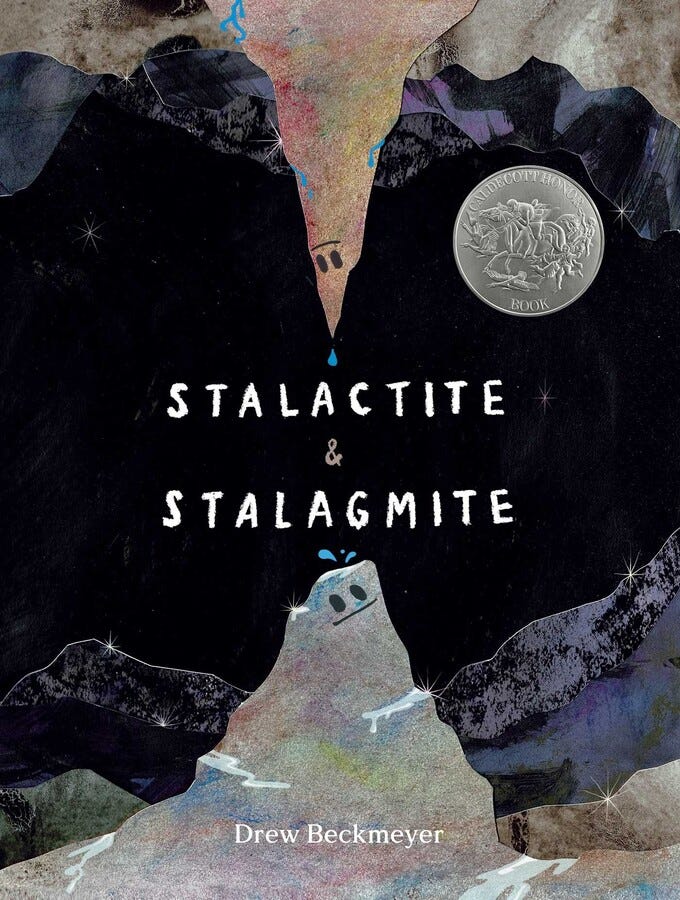
The book tells the story of a stalagmite and a stalactite over the course of the entire history of the earth (it starts with a description of a volcano “burping up rocks,” which gets a big laugh around here). As they slowly grow closer and closer together, they encounter other creatures: a trilobite, a dinosaur, a giant sloth, a miner. And time passes. Billions of years.
What the book illustrates so beautifully is the enormity of that time passing, but also the way time is relative. For the sloth and the trilobite and the miner, time means something very different than it does for the stalagmite and the stalactite. And then, in the end, the story turns again. I won’t tell you what happens, but I will tell you that I was so moved by those rocks that I cried.
Revisiting Childhood
As I work on my book about girlhood, I’ve been trying to find ways back to my own girlhood — to remember who I was when I was nine years old. I’ve never been a rigorous documenter of my life, and I long ago lost whatever pink locked diary I had from those years. I have my memory, the people I still know who knew me then, and I have the things I loved. Namely, I have books.
I was, like so many writers I know, an obsessive reader. I read everything — cereal boxes, shampoo bottles, my brother’s copy of Johnny Tremain that he left in the bathroom. I couldn’t leave words unread, couldn’t sit anywhere without looking around for something to read.
Some books, of course, left a bigger impression than others. They were books that shocked me in the ways they felt familiar, books that both formed me and made me feel seen, and books that opened my eyes to new parts of the world. I was a middle-class white girl in the Midwest, and so most of these books are the ones you might expect: Little Women, The Secret Garden, Black Beauty, Anne of Green Gables.
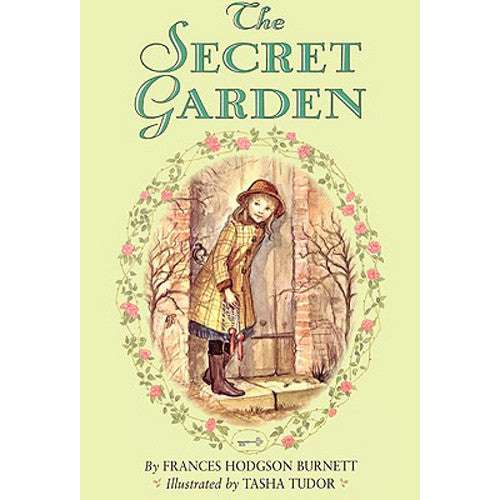
Lately, I’ve been reading these old favorites at night before I fall asleep, a truly pleasurable thing to do. It isn’t a chore or an edification ritual. Reading the books I loved as a girl brings me immediately back to that feeling of reading as something that was just so much fun.
Often, the books surprise me. Even though I read them many times as a child, I’d forgotten major plot points or character traits. For example, Mary from The Secret Garden is thrillingly, unrelentingly selfish for most of the book, and the descriptions of the garden itself are almost erotic. I read recently that Grace Lee Boggs found inspiration in her childhood love of The Secret Garden as she started her urban gardens in Detroit. I can see why: you can’t help but want to plant a seed and watch it grow after you’ve read it (although, beware: it is also pretty racist).
But the thing I actually want to recommend to you — beyond the general activity of revisiting the books you tore through as a child — is one particular book, which isn’t part of the canon in the same way as The Secret Garden.
Wise Child by Monica Furlong is the story of a young girl living in Britain in the Middle Ages. Christianity is dominant, but Pagan healers called dorans — witches, essentially — are present, too. In Wise Child’s village, a doran named Juniper — a beautiful, strong woman who uses herbs to help the villagers — is both an intriguing and terrifying presence. When Wise Child’s grandmother dies and her parents are nowhere to be found, Juniper takes her in and teaches her how to be a doran.
Wise Child isn’t a traditional fantasy novel. It isn’t about battles and sorcerers and Big Magic. Much of the book takes place in Juniper’s cottage, with herbs hanging from the ceiling, beautiful dishes on the shelves, and a cozy nook for Wise Child to sleep in (I desperately want to live in that cottage). Juniper is the mother or sister we all wish we could be, a person who uses love to teach Wise Child, but is still funny and happy to let her learn her own lessons. Wise Child is a reluctant participant. She’s lazy and crabby. She’s not sure for a long time if she wants to be a doran. And the villains in the book aren’t other witches (or not only other witches), but the real forces of history that tried to oppress women who might have been like Juniper: the church and the men.

There were a lot of stories about strong women in the nineties when I was a girl. It was a time of what you might call “Sally Ride feminism.” A woman could go to space! A woman could be a surgeon! If a woman believed in herself, they told us, there was nothing a woman could not do. And while that was exciting as a girl, even then it seemed a bit too sparkly and optimistic.
The thrill of reading about witches is that they are powerful — and that power is threatening. Juniper is unbelievably capable: the richest woman in town, with the best house, the coolest donkey, and a set of skills that is deeply needed. But these same things are what make the town turn against her. As a girl, it was a question I didn’t even realize I was already asking: where does power go when it’s no longer allowed?
Sign up for My Class
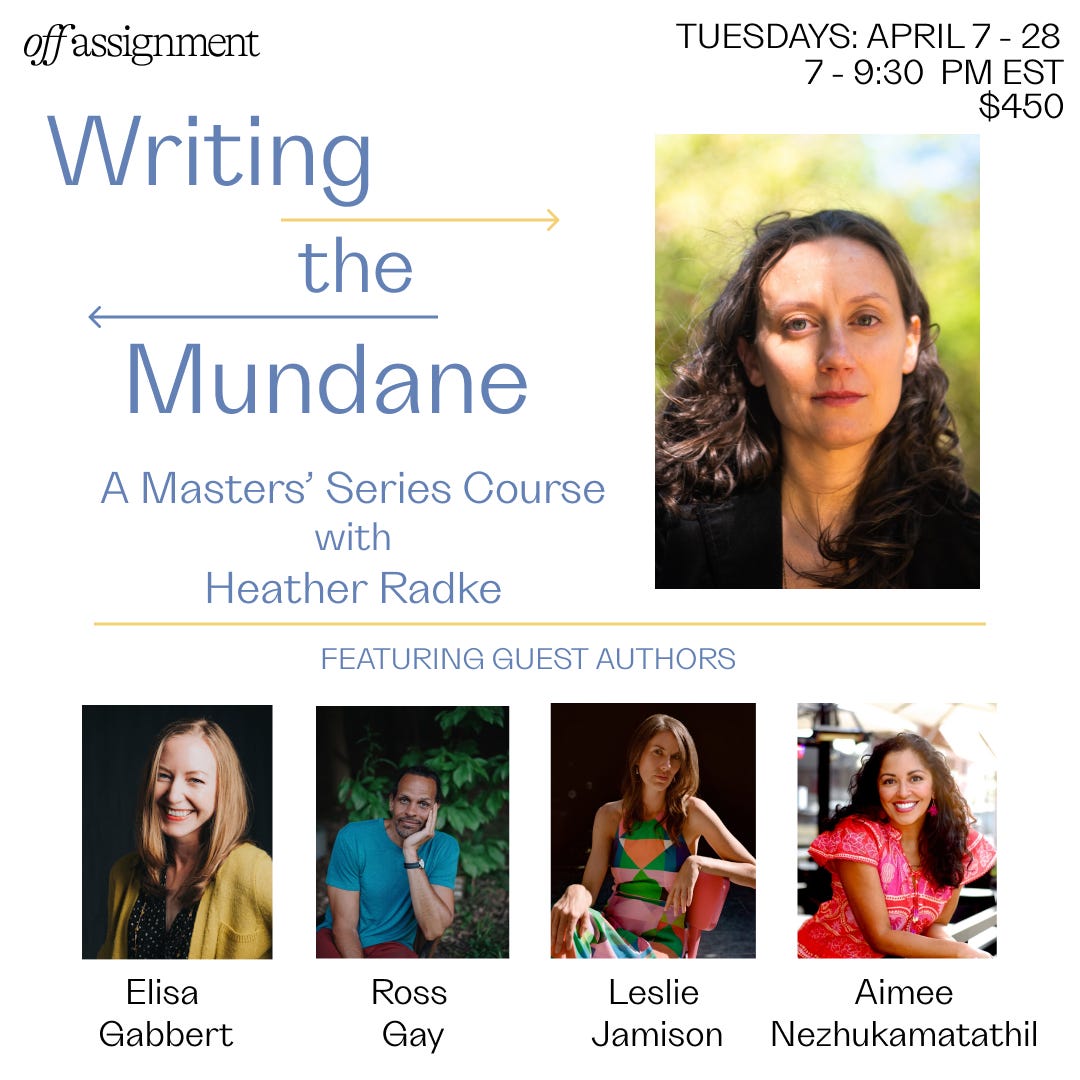
In April, I’m teaching a four-session online seminar for Off Assignment called Writing the Mundane — a class about noticing, attending to, and writing the everyday experiences that most of us let slip by. The course meets on Zoom on Tuesdays from April 7–28, from 7:00–9:30 p.m. EST, and includes craft discussion, generative exercises, and conversations with guest authors about how the ordinary can become powerful, resonant writing. There will also be guest speakers in each class: Elisa Gabbert, Ross Gay, Aimee Nezhukumatathil, and Leslie Jamison. You can find more details and sign up here.