
On Spacebars
And the thrill of having a thing that works

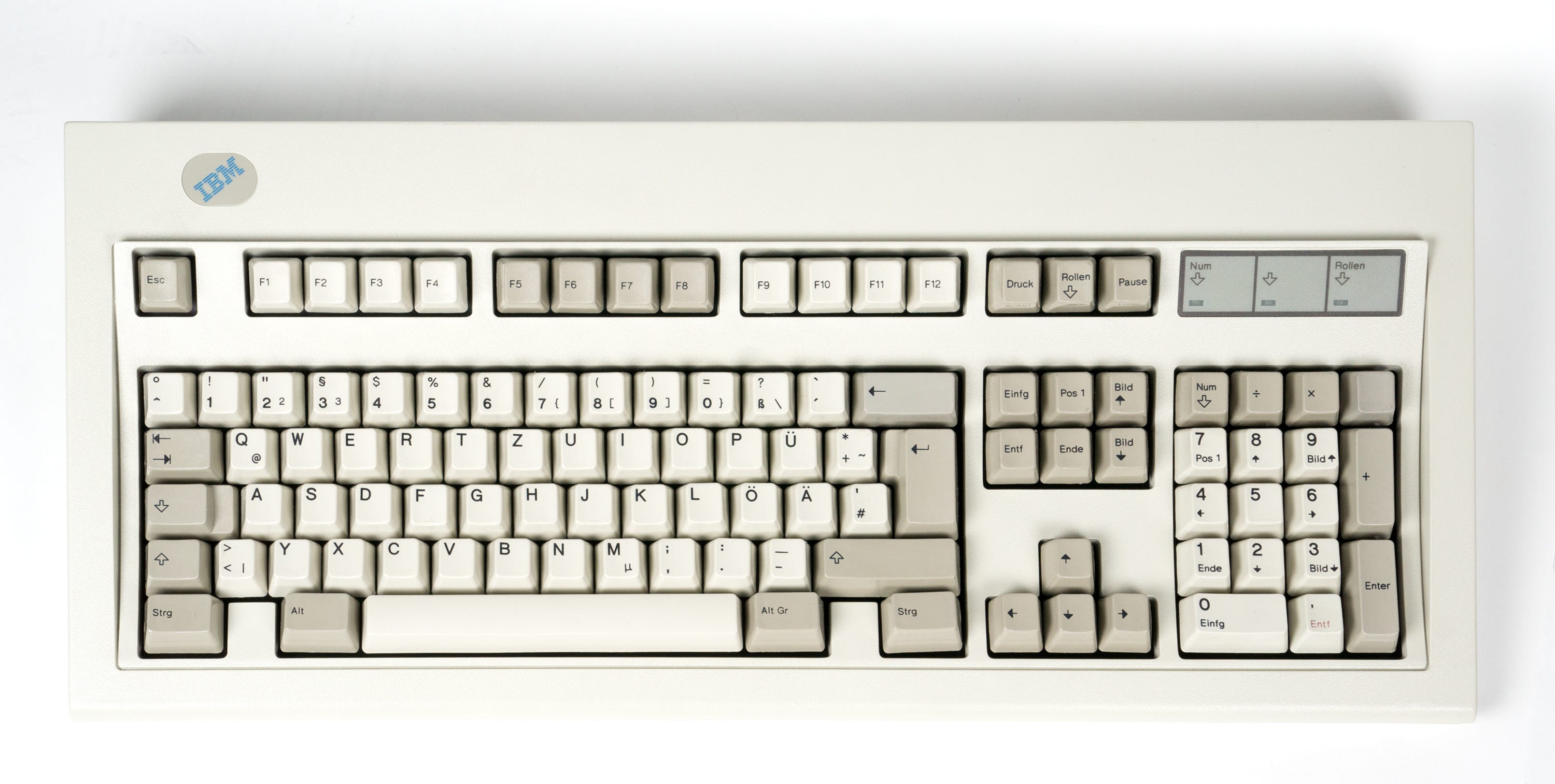
A few weeks ago, the space bar on my keyboard stopped working properly. At first, I thought it was dirty -- when I pushed it down, it remained depressed, failing to spring back up. I imagined a cracker crumb was wedged in its mechanism, or something viscous had seeped below. So I pressed it repeatedly, hard and with increasing violence, hoping to dislodge or crush the offending morsel or wear away the tacky mystery substance. When that did not work, I found a can of compressed air and sprayed it along the outline of the bar. When that also accomplished nothing, I finally gave in and took it to the store for a repair.
From start to finish, this process of fixing (or trying to fix) the spacebar took several weeks. Why? Because finding a can of compressed air in my office supply cabinet is exactly the kind of thing I put off. Also, I almost always use an external keyboard to type, so I could avoid the issue without too much inconvenience during much of the work day.
But, as the weeks wore on, the difficulty of the sticky space bar came to preoccupy me. I sat in bed in the evening, hoping to work, or text, and found myself confronted with the onerous truth of my sticky space bar. In order to make it work, I had to press it down hard, and directly in the middle of the key. And so, with every set of words I texted --”No Problem,” “Do you want spaghetti for dinner?” -- or emailed -- “I hope this email finds you well” -- I felt the weight of the space and the necessity of it.
Even as it is literally nothing, the space is everywhere. It cannot be avoided. With each whack of the key, I came to resent all those spaces, but also began to really notice them. Like a headache whose pain evaporates from memory as soon as the Advil takes effect, it was only in the difficulty that I cared to consider the space, and the broad, majestic bar that created it.
As with so many things, there are whole communities of people who think of spaces and space bars often. One of them -- Dr. Paul Saenger -- is a man I once knew in passing when I was a horribly-paid assistant at the Newberry Library in Chicago. I’m sure Dr. Saenger had no idea who I was, but he was the King of that old, private library, a bespectacled elderly man who knew everything about the history of the book as an object. When he made an appearance at one of the seminars about Civil War letters or medieval French handwriting, the staff treated him with reverence, although I never really understood who he was. As I sat at my desk, resentfully drinking watery coffee (the library required us to pay fifty cents per cup as a cost-saving measure) and replying to emails from junior scholars, I often wondered what it was that he was doing all day. How did library royalty pass the time?
It turns out he was writing a book -- maybe even the book -- on spaces, a volume he granted the quite literal yet somehow also quite poetic title, “The Space Between Words.” And although it may sound like almost a ridiculously picayune subject -- a small potato for sure -- in truth, the spaces between words are incredibly important.
In his book, Saenger explains that, in ancient Rome and Greece, there were rarely spaces between words. Instead, ancient scribes employed what is satisfyingly called scriptio continua -- continuous script. No spaces. Saenger says that spacing makes reading to one’s self easier and faster, but that was not the goal in the ancient world. Instead, reading was an out-loud, communal affair. The notion of curling up with a book alone was entirely foreign.
It was only hundreds of years later, in the seventh century, that Irish scribes began to add spaces to texts. Saenger calls this new type of writing “aerated text,” a lovely term. The text is breathing; it is hanging like laundry on the line. Scribes introduced spaces because to not have them made reading in Latin simply too difficult. In order for the text to be legible, the reader needed a helping hand.
But spaces didn’t just make the texts easier to read out loud, which was still the dominant form of reading. They also enabled people, over many centuries, to begin to read quietly, and alone. Spaces are visual markers of the pauses that we naturally insert into words when we speak them out loud, and they allow the reader to take in words in chunks, rather than one letter at a time. Aerated text effectively mimics speech in a way that scriptio continua didn’t. Before aerated text, text had to be read out loud in order to, essentially, find the spaces. After, people could begin to read quietly, because the spaces were in the text. Or, at least, that’s what I think Saenger is saying! The argument is complicated and dense, and also a bit controversial.
Silent reading is, of course, the way we most often read today. It’s almost certainly how you are ingesting this text now (although I encourage you to read this Substack out loud to loved ones, coworkers, and pets, as often as possible!). Reading silently, and quickly, allowed for many other innovations that are foundational to our modern world. Research -- looking back through texts for specific information -- became far easier. Literacy flourished across classes and languages because more people could access texts. According to Saenger, spaces are what made it possible for ordinary people to read.
The spacebar came much later, of course, with the invention of the typewriter in the 19th century. Some early typewriters didn’t have bars, but instead small levers or keys that assumed a less prominent position. Quickly, though, the bar became dominant -- a sign of just how often a typist needs to insert a space (between every word, it turns out). These days, the people who probably think the most about spacebars are those involved in what is simply referred to as “the hobby” -- people obsessed with creating a perfect computer keyboard (see David Owens article in the New Yorker for more on this fascinating hobby).
Perfect is, obviously, subjective, but those engaged in “the hobby” work obsessively to refine their typing experience to make it as pleasurable and satisfying as possible. They use mechanical switch mechanisms under each key, install rainbow lights that illuminate their keyboards from behind, and customize their keyboards to create special keys for deleting whole words, or to allow them to type in Elvish.
Typing is, at its essence, nothing more than pressing one button after another, over and over again. Keyboard enthusiasts understand that there are few things more satisfying than depressing a button that not only creates exactly the intended effect, but makes exactly the right amount of noise, and has exactly the right amount of resistance before giving way to your fingers’ strength. They want each button they press -- every letter, number, space, and punctuation mark -- to be as gratifying, as pleasurable, as they can possibly be.
When I finally took my computer in to be repaired, Iwas told that the only solution was to buy a new computer, a solution that felt like euthanizing a pet because it has a hangnail. But the technician assured me that it was, unfortunately, not worth the time and expense to just fix the spacebar. The make and model of my machine is old, and they designed it in such a way that any key that requires replacement necessitates the replacement of the entire keyboard.
My new keyboard is a far cry from the hobby’s gold standard (the best keyboard ever created, according to Owens, was probably I.B.M.’s Model F, invented in the early 1980s by David and Amy Sedaris’ father, Lou). I think that type of keyboard might annoy me anyway -- it seems loud and bulky. But, for a few days, I revel in the satisfaction of hitting my space bar with my right thumb and finding it going down, and springing right back up, with ease. What a joy, for a thing to work! For a space to get made! For there to be spaces between words! Aerated, indeed.
Irish scribes!!